Blog

a16

The Judge Who Taught the World Kindness Matters

August 21, 2025

A Tribute Beyond Faith, Borders & Time

Today, I pause to honor a man whose legacy reminds us that humanity is the greatest religion — Judge Frank Caprio.

He lived with compassion, served with fairness, and left us lessons that no scripture, creed, or law could surpass: be kind, be just, be human.

Judge Caprio, even when battling pancreatic cancer, stood tall with courage until his last breath. He never showed bias — every person, whether rich or poor, young or old, immigrant or native, found in him a symbol of justice with mercy.

I remember him holding Pakistan’s flag on Independence Day — a gesture so pure, proving that kindness knows no borders.

Good Deeds Outlive Us

• Religions promise reward hereafter,

• History remembers with gratitude,

• And people quote them as eternal examples.

Caprio’s good deeds will be remembered forever.

Taking the Advantage – Honoring Global Human Heroes

Because justice and compassion are not bound by religion, here are 20 global humanitarians — 10 non-Muslims and 10 Muslims — who devoted their lives to humanity:

More…
fb8

Prophet Muhammad PBUH – Rahmat-ul-Alameen: A Mercy to the Worlds

August 25, 2025
Prophet Muhammad PBUH – Rahmat-ul-Alameen: A Mercy to the Worlds

In the Name of Allah, the Most Merciful, the Most Compassionate

السلام علیکم ورحمة الله وبرکاته — May the eternal peace, mercy, and blessings of Allah be upon you all.

As we enter this sacred month, illuminated by the birth of the most noble personality in human history, our beloved Prophet Muhammad PBUH, the hearts of believers overflow with gratitude, reverence, and love. His coming into this world was not merely the birth of a man; it was the dawn of mercy, justice, and divine guidance that reshaped humanity for all eternity.

The Qur’an itself testifies:

“And We have not sent you, [O Muhammad], except as a mercy to the worlds.”
(Surah Al-Anbiya, 21:107)

This verse establishes the essence of his mission: Muhammad PBUH was sent as a universal mercy, a guiding light for every human heart until the end of time.

The Dawn of Mercy: Birth and Prophethood

In 570 CE, in Makkah, a child was born who would transform the course of human history: Muhammad ibn Abdullah PBUH. Orphaned early in life, he grew up with innate honesty and kindness, earning the title Al-Ameen (the Trustworthy). His contemplation in the Cave of Hira led to the first revelation at age 40:

“Read! In the name of your Lord who created.”
(Surah Al-Alaq, 96:1)

From that moment, he became the final Messenger, guiding humanity with wisdom, mercy, and justice.

Facing the Storms of Persecution

The path of prophethood was marked by immense trials: ridicule, boycotts, physical attacks, and the loss of loved ones, including his wife Khadijah (RA) and uncle Abu Talib in the Year of Sorrow (619 CE). Yet, he PBUH endured all with patience:

“I hope that Allah will bring forth from their descendants people who will worship Allah alone.”
(Sunan Abi Dawud, authentic)

His companions, like Bilal ibn Rabah (RA) and Sumayyah (RA), faced persecution and martyrdom, yet the faith of the Prophet PBUH remained unshaken, exemplifying steadfastness and divine trust.

Eradicating Divisions: Unity of the Arabian Peninsula

Before Islam, tribalism divided Arabia. The Prophet PBUH drafted the Constitution of Madinah, uniting Muslims, Jews, and pagans in mutual defense and equality:

“They are one community (ummah) to the exclusion of all men.”

He declared in his Last Sermon:

“All mankind is from Adam and Eve; an Arab has no superiority over a non-Arab, nor a non-Arab over an Arab; also a white has no superiority over a black, nor a black over a white, except by piety (taqwa).”
(Musnad Ahmad, authentic)

The Conquest of Makkah (630 CE) was a bloodless victory, granting amnesty to former persecutors:

“Go, for you are free.”

Education, Morality, and Social Reform

Prophet Muhammad PBUH transformed a society dominated by illiteracy and superstition into a civilization guided by knowledge and ethics. He declared:

“Seeking knowledge is obligatory upon every Muslim male and female.”
(Ibn Majah, authentic)

He prohibited harmful practices, encouraged honesty and compassion:

“The truthful and trustworthy merchant is with the Prophets, the truthful, and the martyrs.”
(Tirmidhi, authentic)

Empowering Women

The Prophet PBUH elevated women’s status centuries ahead of other societies:

• Mandated inheritance for women (Qur’an 4:7)
• Required consent in marriage (Qur’an 4:19)
• Advocated education for women: “Acquisition of knowledge is binding on all Muslims [male and female].”
(Ibn Majah, authentic)

He PBUH said:

“The best of you are those who are best to their wives.”
(Tirmidhi, authentic)

His household modeled respect, equality, and care for women.

More…
a12

Information + Innovation: The Real Power of the 21st Century

August 26, 2025

Introduction — Power Has Changed Hands

Once upon a time, power was measured in land, armies, and gold. In the 20th century, it shifted to oil, industry, and capital.

However, in the 21st century, real power lies with those who master information and drive innovation.

As Klaus Schwab, founder of the World Economic Forum, notes:

“In the new world, it is not the big fish that eats the small fish; it’s the fast fish that eats the slow fish.”

This is not just a clever line—it is the defining reality of our era.

Why Information Rules the Modern World

• 90% of the world’s data was created in just the past two years. (IDC)

• Companies that are data-driven are 23× more likely to acquire customers, 6× more likely to retain them, and 19× more likely to be profitable. (McKinsey)

• In the S&P 500, intangible assets (data, IP, brand value) now make up 90% of corporate value—compared to just 17% in 1975. (Ocean Tomo Report)

Takeaway for Leaders:

Information is no longer background—it is the currency of competitiveness.

Why Innovation is the Multiplier

Information alone is not enough. Without innovation, data is just noise.

• Apple became a $3 trillion company not by owning information, but by innovating products (iPhone, iPad, Mac ecosystem) around it.

• Tesla didn’t invent the electric car—it innovated on batteries, design, and software integration, creating a trillion-dollar EV market.

• Singapore’s Smart Nation Initiative shows how innovation + data can transform an entire country’s governance, transport, and healthcare.

As Peter Drucker, the father of modern management, said:

“Innovation is the specific instrument of entrepreneurship. It is the act that endows resources with a new capacity to create wealth.”

Takeaway for Leaders:

Innovation is not a luxury—it is the engine of survival and growth.

The Risk of Standing Still

The world punishes complacency:

• Nokia once owned 40% of the mobile phone market—but failed to innovate and lost everything to Apple & Android.

• Kodak invented the digital camera in 1975—but buried it to protect film sales, only to go bankrupt.

• Blockbuster laughed at Netflix’s $50M offer in 2000—by 2010, it was gone.

Lesson: In the 21st century, not innovating is the biggest risk of all.

More…
fb17

Pakistan’s Struggle Between Personality Rule and Institutional Supremacy

In one narrow street stood two doors.

One opened toward a mosque, where an imam sat with knowledge, integrity, and moral clarity.
The other opened toward influence — toward a figure whose wealth, access, and authority could turn decisions into outcomes.

When disputes erupted, residents did not go seeking moral advice. They went seeking enforceable resolution. And resolution was found where power resided.

This is not a story about individuals. It is a reflection on governance architecture.

Where institutions are fragile, principles erode. Where enforcement is inconsistent, ethics remain confined to speeches. Justice without structural authority inevitably drives citizens toward influence rather than law.

Pakistan’s enduring governance crisis begins at this intersection — between moral aspiration and institutional weakness.

Structural Democracy or Procedural Democracy?

Across multiple constituencies in Pakistan, political continuity often remains within confined familial or networked circles. A legislator is elected multiple times. Then a sibling. Then a successor bearing the same surname.

This pattern is not unique to one political party; it is systemic. It reflects a broader issue of political gatekeeping, access barriers, and limited internal democracy within party structures.

The essential question is not how established names win elections. The deeper concern is how many competent, educated, policy-literate citizens never reach the stage of candidacy.

When democracy is reduced to electoral ritual without equitable opportunity distribution, representation narrows. And when representation narrows, public trust erodes.

This is not merely a political observation — it is a governance risk.

Interconnected Power Ecosystems

In developing political systems, politics, business, bureaucracy, and other centers of influence often intersect in complex ways. This reality is observable globally, not exclusively in Pakistan.

However, where regulatory frameworks lack insulation and meritocratic safeguards remain weak, decision-making can drift from rule-based governance toward relationship-based governance.

Perception becomes reality in public psychology:

Access appears stronger than ability.
Recommendation appears stronger than merit.
Networks appear stronger than institutions.

Even when exaggerated, such perceptions generate institutional distrust. And distrust weakens democratic stability.

The Central Question: Individuals or Institutions?

States built around personalities produce volatility.
States built around institutions produce continuity.

If governance revolves around individual leverage, policy direction fluctuates with political transitions. If governance rests upon robust institutions — independent judiciary, empowered local government, transparent civil service, constitutionally protected policy continuity — stability becomes systemic rather than personal.

Pakistan stands at a policy crossroads:

Do we continue strengthening individuals, or do we strengthen systems?

As someone engaged in policy planning within the Pakistan Peoples Party (PPP) across the Gulf and Middle East — and as an entrepreneur operating across markets — I have observed that markets reward predictability, not personality. Institutional credibility attracts investment, strengthens diaspora confidence, and enhances diplomatic leverage.

The same principle applies to states.

Global Reform Precedents

History demonstrates that concentrated elite dominance is not irreversible. Many countries have transitioned from patronage-based systems to merit-based governance through deliberate reform:

Judicial independence with enforceable autonomy.
Transparent, competitive civil service recruitment.
Electoral safeguards with credible oversight.
Internal party democracy.
Free and accountable media.
Non-partisan accountability mechanisms.
Constitutional protection for long-term policy frameworks.

Reform is never automatic. It requires civic maturity, political courage, and institutional redesign. But it is achievable.

Pakistan’s transformation, therefore, is not utopian. It is procedural.

More…
fb16

Honour Killing in Balochistan: A Test for Pakistan

When Even the Quran Could Not Save Her: An Honour Killing in Balochistan

A tribal verdict, two lives extinguished — and a test of Pakistan’s constitutional and moral resolve

In a remote corner of Balochistan, a young woman clutched the Quran and pleaded for her husband’s life. Moments later, gunfire tore through not only two human bodies, but through the fragile covenant between faith, law and humanity.

The incident occurred in July 2025, in the Margat area of Degari district, Balochistan. An illegal tribal jirga reportedly ordered the execution of a married couple accused of marrying for love. The woman, invoking the sanctity of the Quran, begged for mercy. It was denied. She was shot first. Her husband followed.

This was not merely a killing. It was an assault on constitutional order, on Islamic principles, and on human dignity.

A Crime Against Law, Faith and Conscience

So-called “honour killings” are often cloaked in the language of culture. Yet Islamic jurisprudence is unequivocal: the unjust killing of one innocent person is akin to killing all humanity. Elevating tribal custom above state law and religious ethics represents a grave distortion of both.

Under Pakistan’s Constitution, parallel justice systems hold no legitimacy. The existence of illegal jirgas issuing death sentences is a direct challenge to state authority and due process.

The tragedy in Degari is therefore not only about two individuals. It is about the integrity of the Republic.

More…
fb15

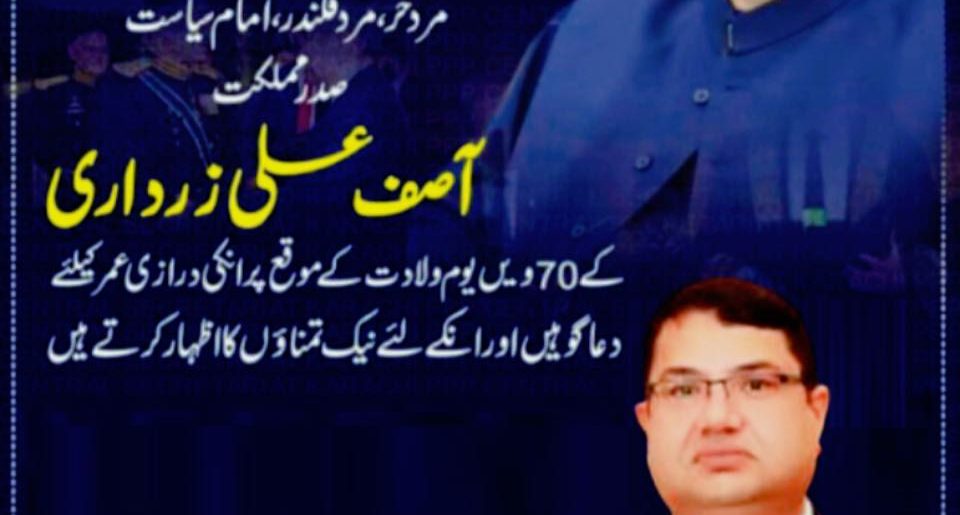
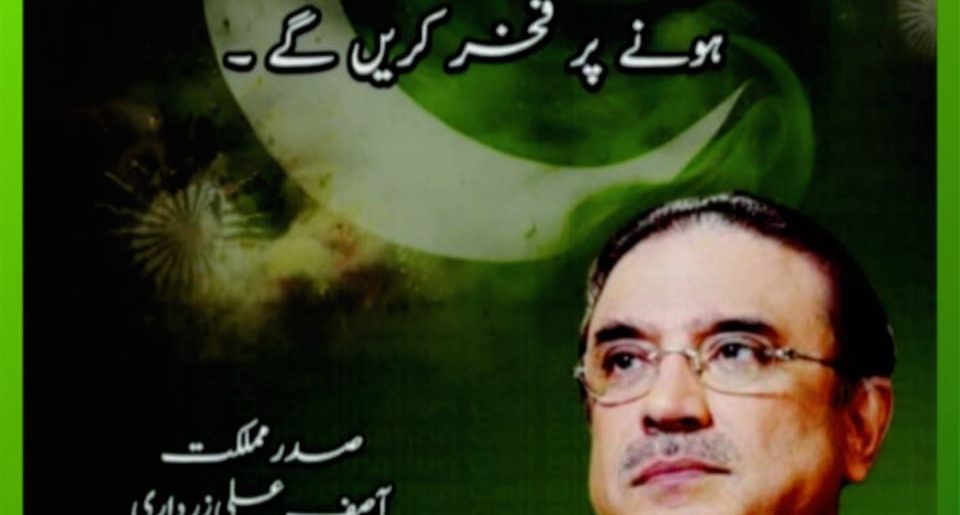
Happy Birthday Asif Ali Zardari | Democratic Leadership and Constitutional Legacy

A Life Defined by Endurance

Today, we extend heartfelt birthday wishes to Asif Ali Zardari — the 11th President of Pakistan — whose political journey reflects resilience, constitutional fidelity, and democratic continuity.

This is not merely a celebration of age.
It is recognition of endurance.

From standing beside the martyred Benazir Bhutto during the most turbulent chapters of Pakistan’s political history, to assuming leadership responsibilities under national trauma, his trajectory has been marked by composure under pressure.

Trials, Allegations, and Due Process

Over decades, Asif Ali Zardari faced multiple legal cases, investigations, political accusations, and imprisonment.

These included:
• Accountability proceedings
• Financial misconduct allegations
• High-profile political controversies

He consistently appeared before courts and navigated legal processes within institutional frameworks. Supporters argue that many cases were politically motivated; critics maintain scrutiny was necessary.

What remains uncontested is that he endured prolonged incarceration without political exile and remained within the constitutional arena.

In democratic systems, history ultimately evaluates leaders by institutional outcomes — not only accusations.

More…
fb14

PPP Worker Dignity Legacy | Respect, Empowerment and Democratic Inclusion

Respect as Political Philosophy

Political movements endure not because of slogans — but because of structure.

The Pakistan Peoples Party (PPP) has historically grounded its identity in the dignity of its workers, organizers, and grassroots supporters. From factory floors to student unions, from rural constituencies to overseas chapters in the Gulf and Middle East, the party’s strength has rested on those who organize, mobilize, and represent its ideals.

Dignity is not ceremonial.
It is structural.

More…
fb13

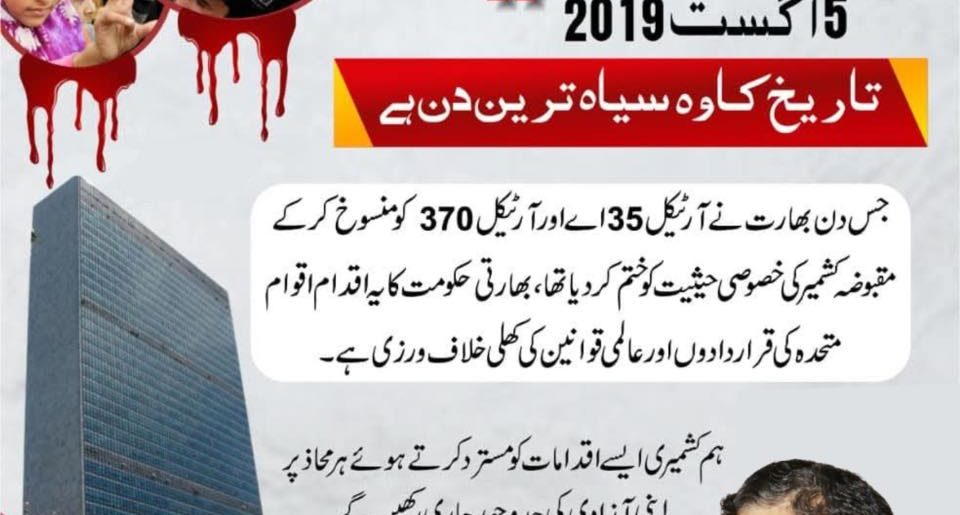
Youm-e-Istehsal 5 August | Kashmir Article 370 Revocation and Human Rights Concerns

A Date That Reshaped a Disputed Territory

5 August 2019 remains one of the most consequential dates in the modern history of Jammu and Kashmir.

On this day, the Government of India revoked Article 370 and Article 35A of its Constitution, removing the region’s semi-autonomous constitutional status.

The move triggered immediate and far-reaching developments:
• Expanded security deployment
• Communication blackouts
• Political detentions
• Legal and administrative restructuring

The event significantly altered the political and constitutional framework governing the region.

Security Lockdown and Communication Restrictions

Following the constitutional changes:
• Thousands of additional security personnel were deployed
• Internet, telephone, and media communication were suspended
• Numerous political leaders and activists were detained

International observers and rights organizations raised concerns regarding civil liberties, freedom of movement, and due process.

India maintained that the measures were necessary to preserve law and order and promote long-term integration and development.

The divergence in narratives continues to define the international debate.

Demographic and Legal Changes

Post-2019 policy changes enabled:
• Non-residents to purchase property
• New domicile regulations
• Administrative reorganization into Union Territories

Critics describe these measures as attempts to alter demographic balance.
Indian authorities frame them as constitutional normalization.

The dispute reflects deeper, longstanding tensions over sovereignty and self-determination.

More…
fb12

Sufism, Ethics and Respect | A Universal Message of Humanity and Moral Leadership

The Essence of Life

Life is brief. Its true beauty lies not in possession — but in perception. Not in dominance — but in dignity.

Across centuries, prophets, saints, philosophers, and spiritual reformers have repeated a single truth:

Respect others.
Love without arrogance.
See humanity before difference.

“None is inferior before God… the only smallness lies in looking down upon others.”

Sufi and Philosophical Guidance

Throughout history, moral clarity has transcended borders.
• Ali ibn Abi Talib (Nahj al-Balagha, Sermon 53):
“People are either your brothers in faith or your equals in humanity.”
• Jesus Christ (Luke 6:31):
“Do unto others as you would have them do unto you.”
• Bulleh Shah:
“Destroy the mosque, destroy the temple… but do not break a human heart, for God resides within it.”
• Rumi (Masnavi):
“Be like a tree and let the dead leaves fall.”

These voices, separated by time and geography, converge on one ethical axis:
Human dignity.

More…
fb11

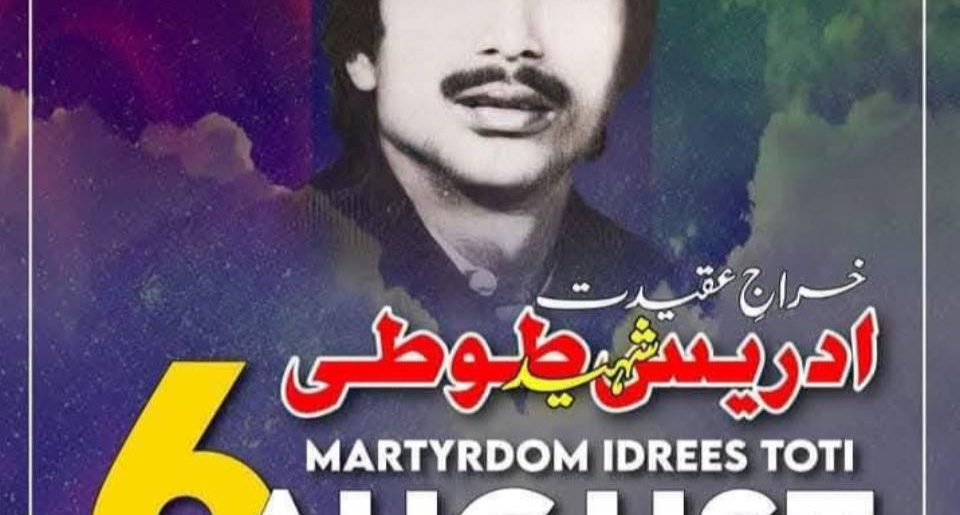
Idris Tooti and Usman Ghani | Martyrs of Democracy Executed in 1984

A Date Etched in Democratic Memory

On 6 August 1984, inside Kot Lakhpat Jail, Lahore, two young political activists — Idris Tooti and Usman Ghani — were executed during the military rule of Muhammad Zia-ul-Haq.

They were 21 and 19 years old.

They were not political elites.
They were not heirs to power.

They were students shaped by conviction.

The Context: Pakistan in the 1980s

The 1980s represented one of the most restrictive periods in Pakistan’s political history. Martial law governance, curbs on political parties, limitations on media, and constraints on student movements defined the era.

Within this environment, young activists associated with democratic mobilization faced heightened scrutiny and risk.

Idris Tooti of Lahore was linked to student political activism.
Usman Ghani of Rawalpindi was similarly engaged in youth mobilization.

Their supporters maintain that the judicial proceedings lacked transparency and were influenced by political considerations. Critics of that period continue to debate the fairness of trials conducted under martial law regulations.

History has not closed its discussion on that chapter.

More…