

When Even the Quran Could Not Save Her: An Honour Killing in Balochistan
A tribal verdict, two lives extinguished — and a test of Pakistan’s constitutional and moral resolve
In a remote corner of Balochistan, a young woman clutched the Quran and pleaded for her husband’s life. Moments later, gunfire tore through not only two human bodies, but through the fragile covenant between faith, law and humanity.
The incident occurred in July 2025, in the Margat area of Degari district, Balochistan. An illegal tribal jirga reportedly ordered the execution of a married couple accused of marrying for love. The woman, invoking the sanctity of the Quran, begged for mercy. It was denied. She was shot first. Her husband followed.
This was not merely a killing. It was an assault on constitutional order, on Islamic principles, and on human dignity.
⸻
A Crime Against Law, Faith and Conscience
So-called “honour killings” are often cloaked in the language of culture. Yet Islamic jurisprudence is unequivocal: the unjust killing of one innocent person is akin to killing all humanity. Elevating tribal custom above state law and religious ethics represents a grave distortion of both.
Under Pakistan’s Constitution, parallel justice systems hold no legitimacy. The existence of illegal jirgas issuing death sentences is a direct challenge to state authority and due process.
The tragedy in Degari is therefore not only about two individuals. It is about the integrity of the Republic.
⸻
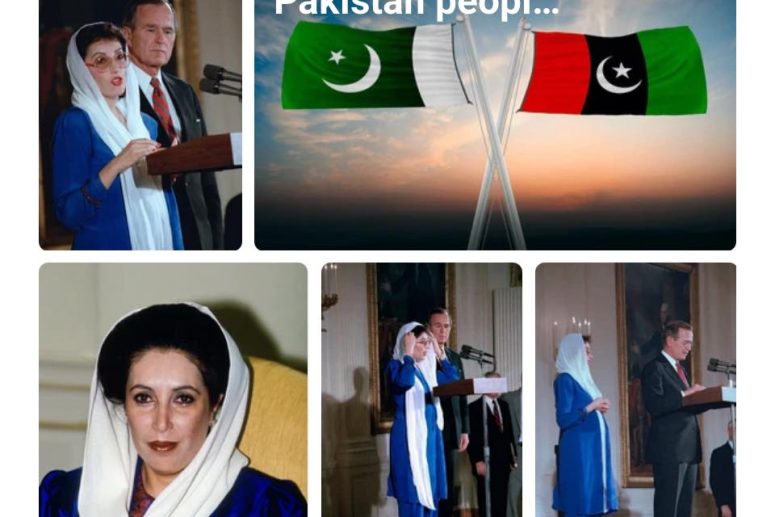
The Pakistan Peoples Party’s Historical Position
The stance of the Pakistan Peoples Party has long been explicit.
In 1988, Benazir Bhutto declared:
“The killing of a woman is not family honour — it is national disgrace.”
In 2016, Parliament passed the Anti-Honour Killing Law, closing loopholes that previously allowed perpetrators to escape punishment through familial pardons. Supporting the legislation, Bilawal Bhutto Zardari stated:
“There is no honour in murder. It is cowardice, not culture.”
The law strengthened the state’s authority to prosecute and made punishment more stringent and mandatory. It was a crucial legislative milestone — but laws are only as strong as their enforcement.
⸻
Recent Developments
Following the Degari killings, Mir Sarfraz Bugti ordered immediate investigations and arrests.
• FIR registered
• One suspect arrested
• Case transferred to an Anti-Terrorism Court
This classification matters. Treating such crimes not as “family matters” but as threats to public order reinforces constitutional supremacy.
⸻
Malik Muhammad Ishaq’s Position
Malik Muhammad Ishaq, President of the Pakistan Peoples Party (Policies & Planning – Gulf & Middle East), has stated:
“When a wife invokes the Quran to save her husband and is met with bullets instead, silence becomes complicity.
This is not only the murder of two individuals — it is the wounding of Pakistan’s conscience.
We will confront this injustice in Parliament, in the courts, and in the court of public awareness.”
⸻
A Message That Must Be Clear
Honour killing is neither tradition nor culture. It is homicide.
The supremacy of the Constitution, the integrity of Islamic principles, and the dignity of human life are not negotiable. A state that tolerates parallel systems of violence undermines itself.
Silence is not neutrality. It is permission.
⸻
Editorial Note
This article was originally written in Urdu for publication in a Gulf/Middle East newspaper. For international readers, a carefully translated and contextually structured English version is presented here while preserving the political and historical nuance of the original text.https://www.facebook.com/100063646123366/posts/1321917483273110/?mibextid=wwXIfr&rdid=nG0vlkEO2JbLEdX6#
⸻