

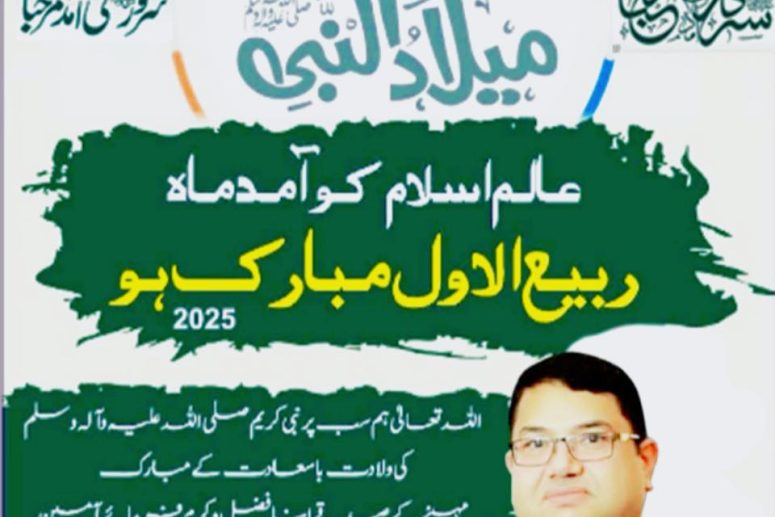
A Month of Reflection and Renewal
In the blessed month of Rabi-ul-Awwal, hearts across the Muslim world turn toward the birth of the final Messenger, Prophet Muhammad (peace be upon him).
His life was not merely a historical chapter — it was a living embodiment of mercy, justice, patience, and moral courage.
For over fourteen centuries, his Seerah has illuminated civilizations and redefined ethical leadership.
⸻
Mercy Over Vengeance
Despite persecution, exile, and hardship, the Prophet (PBUH) consistently chose forgiveness over retaliation.
At the conquest of Makkah, when he stood in a position of absolute authority, he declared to former adversaries:
“Go, you are free.”
This was not political expediency.
It was principled mercy.
Compassion became the foundation of unity.
⸻
Knowledge as Liberation
The Prophet (PBUH) emphasized learning as a sacred obligation:
“Seeking knowledge is obligatory upon every Muslim man and woman.” (Ibn Majah)
He transformed the mosque into a center of scholarship, moral formation, and community cohesion.
Education, justice, and ethical conduct became pillars of Islamic civilization.
⸻
Women’s Rights — A Revolutionary Reform
In a 7th-century society marked by gender inequities, the Prophet (PBUH) introduced reforms that were unprecedented for their time.
The Qur’an affirmed:
• Women’s right to inheritance (Surah An-Nisa 4:7)
• Marriage by consent (Surah An-Nisa 4:19)
• Moral equality before God
He stated:
“The best among you are those who are best to their wives.” (Tirmidhi)
These were not symbolic statements.
They were structural reforms that reshaped social norms.
⸻
Universal Equality
In his Farewell Sermon, delivered during Hajj, the Prophet (PBUH) proclaimed:
“All mankind is from Adam and Eve. An Arab has no superiority over a non-Arab, nor a non-Arab over an Arab; a white over a black, nor a black over a white — except by piety.”
This declaration dismantled racial hierarchies centuries before modern human rights frameworks emerged.
⸻
Mercy to All Worlds
The Qur’an affirms:
“And We have not sent you, [O Muhammad], except as a mercy to the worlds.” (21:107)
His message transcended geography, ethnicity, and era.
Even non-Muslim intellectuals have acknowledged his extraordinary influence:
• Michael H. Hart ranked him among the most influential figures in human history.
• Mahatma Gandhi recognized his moral discipline as foundational to Islam’s endurance.
• Thomas Carlyle described his voice as one that echoed from the depths of truth itself.
His impact was civilizational.
⸻
The Farewell Sermon: A Charter of Human Dignity
Among its timeless principles:
• The sanctity of life, property, and honor
• Kindness toward women
• Adherence to the Qur’an and Sunnah
• Accountability before God
The sermon remains one of the earliest comprehensive declarations of human rights and ethical governance.
⸻
Remembering Zulfikar Ali Bhutto and the Protection of Finality of Prophethood
In 1974, under the leadership of Zulfikar Ali Bhutto, Pakistan’s Parliament adopted a constitutional amendment affirming the finality of Prophethood (Khatm-e-Nabuwwat), declaring the Ahmadi community non-Muslim under constitutional law.
This decision remains a significant milestone in Pakistan’s legislative and theological history and is remembered by many as an act of safeguarding a central tenet of Islamic belief.
History evaluates leaders not only by power exercised, but by convictions upheld.
⸻
A Prayer for Guidance
O Allah, grant us the ability to embody the character of Your Beloved Prophet (PBUH).
Grant us justice with compassion, strength with humility, and faith with wisdom.
O Allah, elevate the ranks of those who served their nation with sincerity.
Guide us to live in accordance with the Qur’an and Sunnah.
اللهم صل على محمد وآل محمد
⸻
Conclusion
Rabi-ul-Awwal is not merely remembrance — it is renewal.
The life of Prophet Muhammad (PBUH) is a compass for:
• Justice in leadership
• Mercy in authority
• Equality in society
• Integrity in governance
May this blessed month illuminate our hearts and inspire us to reflect his teachings in our personal, social, and national lives.
⸻
Editorial Note
This article was originally written in Urdu for publication in a Gulf/Middle East newspaper. For the convenience of international readers, a carefully translated English version is presented here while preserving the original meaning, reverence, and context. The official source link is provided below.
https://www.facebook.com/100063646123366/posts/1353352556796269/?mibextid=wwXIfr&rdid=OzoMjnx4regIe00C#
⸻