

In one narrow street stood two doors.
One opened toward a mosque, where an imam sat with knowledge, integrity, and moral clarity.
The other opened toward influence — toward a figure whose wealth, access, and authority could turn decisions into outcomes.
When disputes erupted, residents did not go seeking moral advice. They went seeking enforceable resolution. And resolution was found where power resided.
This is not a story about individuals. It is a reflection on governance architecture.
Where institutions are fragile, principles erode. Where enforcement is inconsistent, ethics remain confined to speeches. Justice without structural authority inevitably drives citizens toward influence rather than law.
Pakistan’s enduring governance crisis begins at this intersection — between moral aspiration and institutional weakness.
⸻
Structural Democracy or Procedural Democracy?
Across multiple constituencies in Pakistan, political continuity often remains within confined familial or networked circles. A legislator is elected multiple times. Then a sibling. Then a successor bearing the same surname.
This pattern is not unique to one political party; it is systemic. It reflects a broader issue of political gatekeeping, access barriers, and limited internal democracy within party structures.
The essential question is not how established names win elections. The deeper concern is how many competent, educated, policy-literate citizens never reach the stage of candidacy.
When democracy is reduced to electoral ritual without equitable opportunity distribution, representation narrows. And when representation narrows, public trust erodes.
This is not merely a political observation — it is a governance risk.
⸻
Interconnected Power Ecosystems
In developing political systems, politics, business, bureaucracy, and other centers of influence often intersect in complex ways. This reality is observable globally, not exclusively in Pakistan.
However, where regulatory frameworks lack insulation and meritocratic safeguards remain weak, decision-making can drift from rule-based governance toward relationship-based governance.
Perception becomes reality in public psychology:
Access appears stronger than ability.
Recommendation appears stronger than merit.
Networks appear stronger than institutions.
Even when exaggerated, such perceptions generate institutional distrust. And distrust weakens democratic stability.
⸻
The Central Question: Individuals or Institutions?
States built around personalities produce volatility.
States built around institutions produce continuity.
If governance revolves around individual leverage, policy direction fluctuates with political transitions. If governance rests upon robust institutions — independent judiciary, empowered local government, transparent civil service, constitutionally protected policy continuity — stability becomes systemic rather than personal.
Pakistan stands at a policy crossroads:
Do we continue strengthening individuals, or do we strengthen systems?
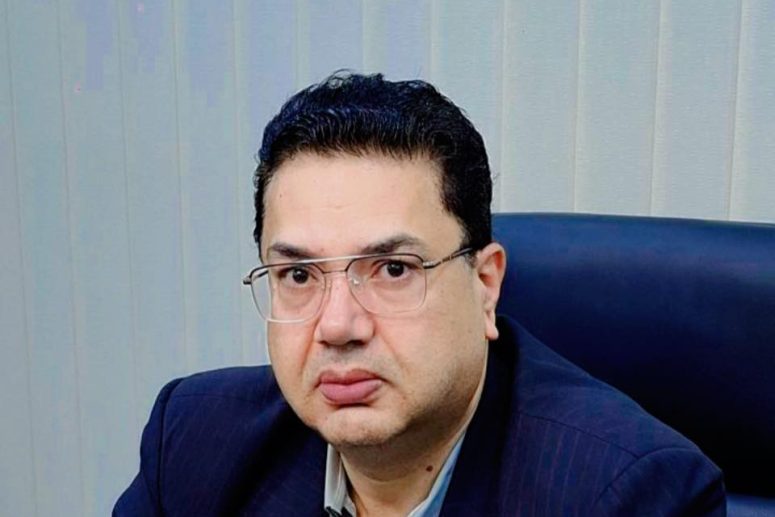
As someone engaged in policy planning within the Pakistan Peoples Party (PPP) across the Gulf and Middle East — and as an entrepreneur operating across markets — I have observed that markets reward predictability, not personality. Institutional credibility attracts investment, strengthens diaspora confidence, and enhances diplomatic leverage.
The same principle applies to states.
⸻
Global Reform Precedents
History demonstrates that concentrated elite dominance is not irreversible. Many countries have transitioned from patronage-based systems to merit-based governance through deliberate reform:
Judicial independence with enforceable autonomy.
Transparent, competitive civil service recruitment.
Electoral safeguards with credible oversight.
Internal party democracy.
Free and accountable media.
Non-partisan accountability mechanisms.
Constitutional protection for long-term policy frameworks.
Reform is never automatic. It requires civic maturity, political courage, and institutional redesign. But it is achievable.
Pakistan’s transformation, therefore, is not utopian. It is procedural.
⸻
Justice Beyond Rhetoric
Every enduring moral tradition — including Islamic jurisprudence — anchors societal stability in justice. The Qur’anic command to uphold justice even against oneself establishes accountability as a moral and structural obligation.
Yet justice does not operate on intention alone. It requires enforceable law, procedural transparency, and institutional insulation from arbitrary influence.
Justice without system design is sentiment.
Justice with institutional architecture becomes governance.
⸻
The Institutional Nature of Pakistan’s Crisis
Pakistan’s challenge is not confined to electoral competition. It is institutional:
Policy discontinuity across administrations.
Limited political mobility for youth and women.
Perceived politicization of administrative structures.
Weak empowerment of local governments.
Accountability mechanisms lacking consistent neutrality.
When citizens perceive structural limitation, they disengage. When disengagement spreads, democracy weakens.
Institutional reform is therefore not optional — it is existential.
⸻
A Reform Framework
If reform is to be substantive rather than rhetorical, it must include:
Internal democratization of political parties.
Transparent candidate selection mechanisms.
Protection of civil service from political interference.
Merit-based evaluation in competitive examinations and recruitment systems.
Devolution of meaningful fiscal and administrative authority to local governments.
Depoliticized accountability frameworks.
Constitutional safeguards for long-term economic and foreign policy continuity.
Structured political pathways for youth, women, and overseas Pakistanis.
When systems mature, individuals operate within balanced boundaries. Stability becomes rule-based rather than personality-dependent.
⸻
A Merit-Based Republic
The core question remains:
Do we envision a Pakistan where opportunity is surname-linked?
Or a Pakistan where opportunity is merit-linked?
Institutional governance does not weaken leadership; it dignifies it. It ensures that authority is exercised within predictable, transparent frameworks.
When principles gain enforcement power, citizens stop knocking on the doors of influence. They enter through the doors of justice.
⸻
Conclusion: From Personality to Policy
Transformation does not originate in slogans. It emerges from structure.
Wisdom requires courage.
Reform requires endurance.
Institution-building requires collective seriousness.
My position is clear: rational governance, institutional continuity, policy coherence, and citizen empowerment must define Pakistan’s next chapter.
If institutions become stronger than individuals, Pakistan will not merely stabilize — it will globalize its credibility.
And on that day, citizens will not seek power brokers. They will seek lawful remedies.
⸻
For readers who prefer the original Urdu version, this column has also been published in leading newspapers including Daily Jinnah and Daily Hareef, and is available on my official Facebook platform. Thoughtful engagement, evidence-based debate, and policy-focused dialogue are encouraged.
Facebook link : https://www.facebook.com/share/p/1Aa1744nwP/
Daily Jinnah lahore : https://share.google/YtcufyIF0fmhELvuL
⸻