

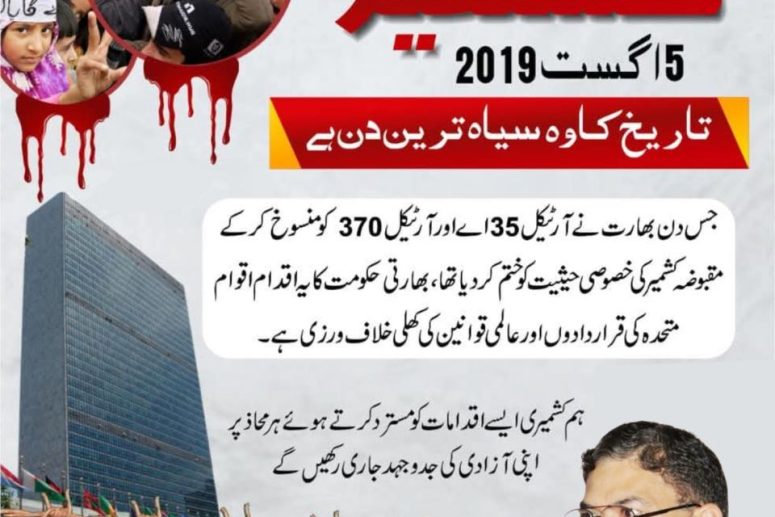
A Date That Reshaped a Disputed Territory
5 August 2019 remains one of the most consequential dates in the modern history of Jammu and Kashmir.
On this day, the Government of India revoked Article 370 and Article 35A of its Constitution, removing the region’s semi-autonomous constitutional status.
The move triggered immediate and far-reaching developments:
• Expanded security deployment
• Communication blackouts
• Political detentions
• Legal and administrative restructuring
The event significantly altered the political and constitutional framework governing the region.
⸻
Security Lockdown and Communication Restrictions
Following the constitutional changes:
• Thousands of additional security personnel were deployed
• Internet, telephone, and media communication were suspended
• Numerous political leaders and activists were detained
International observers and rights organizations raised concerns regarding civil liberties, freedom of movement, and due process.
India maintained that the measures were necessary to preserve law and order and promote long-term integration and development.
The divergence in narratives continues to define the international debate.
⸻
Demographic and Legal Changes
Post-2019 policy changes enabled:
• Non-residents to purchase property
• New domicile regulations
• Administrative reorganization into Union Territories
Critics describe these measures as attempts to alter demographic balance.
Indian authorities frame them as constitutional normalization.
The dispute reflects deeper, longstanding tensions over sovereignty and self-determination.
⸻
Pakistan Peoples Party’s Historical Position
The Pakistan Peoples Party has consistently articulated support for the right of self-determination for the Kashmiri people in line with United Nations Security Council resolutions.
Leaders across generations have publicly affirmed this stance:
• Zulfikar Ali Bhutto emphasized diplomatic and political advocacy on Kashmir in international forums.
• Benazir Bhutto reiterated solidarity with the Kashmiri cause in global assemblies.
• Asif Ali Zardari described Kashmir as central to Pakistan’s foreign policy discourse.
• Bilawal Bhutto Zardari has repeatedly raised the issue at multilateral platforms, describing the region as heavily securitized and advocating renewed diplomatic engagement.
The party frames Kashmir not solely as a territorial dispute, but as a question of political rights and international legality.
⸻
Why 5 August Resonates Internationally
The date carries global implications because:
• The Kashmir dispute has longstanding United Nations engagement.
• South Asia remains a nuclear-armed region.
• Human rights organizations continue monitoring developments.
• Bilateral tensions between India and Pakistan impact regional stability.
Kashmir’s status is not merely a bilateral concern — it intersects with international law, regional peace, and global diplomacy.
⸻
A Call for Peaceful Resolution
The enduring pathway forward requires:
• Dialogue between stakeholders
• Protection of civilian rights
• Respect for international commitments
• Confidence-building measures
• Avoidance of escalatory rhetoric
Sustainable peace cannot emerge from silence — nor from confrontation alone.
It demands principled negotiation.
⸻
Conclusion: The Question Remains
Youm-e-Istehsal symbolizes grievance for many in Pakistan and among segments of the Kashmiri diaspora.
For India, it represents constitutional integration.
Between these narratives lies a complex geopolitical reality — one that will shape South Asia’s future stability.
The voice of Kashmir, regardless of perspective, remains central to regional discourse.
Lasting resolution will require courage, diplomacy, and adherence to international norms.
⸻
Editorial Note
This article was originally written in Urdu for publication in a Gulf/Middle East newspaper. For international readers, a carefully translated and contextually framed English version is presented here while preserving the political nuance and diplomatic framing of the original text.https://www.facebook.com/100063646123366/posts/1335229018608623/?mibextid=wwXIfr&rdid=Pi2jgQQubB2biRgO#
⸻