

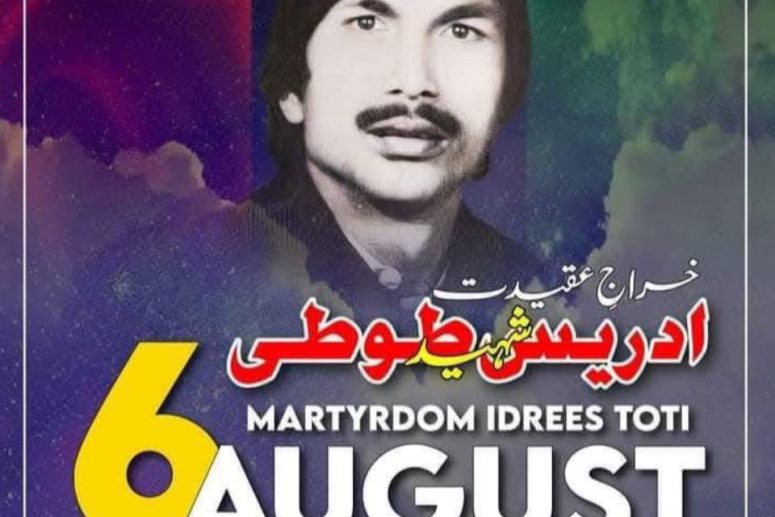
A Date Etched in Democratic Memory
On 6 August 1984, inside Kot Lakhpat Jail, Lahore, two young political activists — Idris Tooti and Usman Ghani — were executed during the military rule of Muhammad Zia-ul-Haq.
They were 21 and 19 years old.
They were not political elites.
They were not heirs to power.
They were students shaped by conviction.
⸻
The Context: Pakistan in the 1980s
The 1980s represented one of the most restrictive periods in Pakistan’s political history. Martial law governance, curbs on political parties, limitations on media, and constraints on student movements defined the era.
Within this environment, young activists associated with democratic mobilization faced heightened scrutiny and risk.
Idris Tooti of Lahore was linked to student political activism.
Usman Ghani of Rawalpindi was similarly engaged in youth mobilization.
Their supporters maintain that the judicial proceedings lacked transparency and were influenced by political considerations. Critics of that period continue to debate the fairness of trials conducted under martial law regulations.
History has not closed its discussion on that chapter.
⸻
The Execution
In the early hours before Fajr on 6 August 1984, the two were executed.
Reports from the time indicate restricted public communication, minimal media coverage, and limited procedural visibility surrounding the final stage of their case.
Regardless of legal interpretation, their youth and political association transformed their deaths into a powerful symbol within democratic circles.
⸻
Political Memory and Symbolism
For many within the Pakistan Peoples Party and allied democratic movements, Idris Tooti and Usman Ghani became enduring symbols of resistance.
They came to represent:
• Student political consciousness
• Civilian opposition to authoritarian rule
• Commitment to constitutional governance
• Youth courage in times of repression
Their memory remains interwoven with the broader democratic struggle initiated under the leadership of Zulfikar Ali Bhutto.
⸻
The Broader Democratic Question
Their story raises enduring questions relevant even today:
• What safeguards protect dissent in times of political crisis?
• How should judicial transparency be ensured under extraordinary governance?
• What role should youth play in shaping democratic evolution?
Democracy has never been a passive inheritance.
It has always demanded participation.
⸻
Legacy for Today’s Youth
The mission associated with their names continues to echo in four enduring principles:
• Supremacy of the Constitution
• Political awareness among students
• Sovereignty of the people
• Peaceful resistance against injustice
Their sacrifice — as remembered by supporters — is framed not as an isolated tragedy but as part of Pakistan’s ongoing journey toward institutional maturity.
⸻
Conclusion: Democracy Requires Vigilance
Whether viewed through legal, political, or moral lenses, the execution of young activists during a period of authoritarian governance remains a defining episode in Pakistan’s democratic narrative.
Their names endure because democratic memory persists.
Democracy is not granted permanently.
It is protected continuously.
And history remembers those who stood when standing carried consequence.
⸻
Editorial Note
This article was originally written in Urdu for publication in a Gulf/Middle East newspaper. For international readers, a carefully translated and contextually framed English version is presented here while preserving the historical and political nuance of the original text.https://www.facebook.com/100063646123366/posts/1337386271726231/?mibextid=wwXIfr&rdid=txEpuJKtlXigxTJo#
⸻